Position to Win

Kobe Bryant hitting a game-winning shot against the Miami Heat on December 12, 2009. Image courtesy of NBA.

There is a sports term, “a position to win”, which means that everything is in place for a team or an individual to win the game, championship, gold medal or whatever the goal may be. The opposite would mean that the goal is out of reach and there is really nothing else to do than work towards having a better chance at victory in the future.

Like in sports, we may or may not be in a position to win in our work. For me, winning in work means being in a situation that allows you to do good work, little by little reach your potential and move in a direction of self-fulfillment. The possibility to work to the best of your abilities and create real value is key in my opinion.

So, what does it take to do good work? I think there are four main factors. First, you must want to do your job because you like it and it comes naturally to you. Second, you have to have the knowledge, skills and experience required. Third, your employer or customers have to agree with you on what it is that you should be doing. And last but not least, you need to have the freedom to choose what you see as the right course of action.

The fourth point I call the “walkaway factor”. For it to be truly possible for you to speak your mind or do what needs to be done without hesitation, you need the option to stand up, walk away and never come back. Unfortunately, doing the right thing may have consequences that are best resolved by leaving and sometimes it’s the only thing to do. Not to say that leaving should be your go-to option, but if it’s not even an option, then you are not truly free to do what you think is best.

I suspect that a great deal of unhappiness results from our inability or unwillingness to see that some of the factors above are missing. We may be doing work that we’re not really suited for, we may be alone with our ideas about what our job should be, or we may not be truly free to act. Often the reaction to this is an effort to control the situation and force our way, but in reality, the only thing we have control over is making sure that all the pieces are in place.

Position to Win

Paint-by-Numbers Leadership

steve-carrell-as-michael-scott-art.jpg

Steve Carrell as Michael Scott by Art.

If you’ve spent a day in leadership training, you may have had the same experience as I have. There’s a lecture on how to manage people, maybe some less than scientific personality psychology thrown in, a couple of group exercises, and the day ends with putting together a list of things that make a good leader.

Maybe after your training day you went online or picked up a book and found some more examples of good leadership qualities. If you did, you probably ended up with a list as long as your LinkedIn feed. Now, as an inspired leader of people, you make an effort to apply what you’ve learned in your work. Pretty soon, you’re likely to find that navigating human interaction with the help of lists is not the best idea.

The problem with the kind of paint-by-numbers leadership that is promoted by saying that “If you do these things, you’ll be a good leader” is that it doesn’t work. You can’t concentrate on ten things that make a leader when you’re listening someone telling you about his or her perceived mistreatment, chronic illness or failed relationship.

Making an effort when managing people is absolutely necessary, and to do it well, you need an idea of what good leadership looks like. Lists or any other format of advice can definitely help in this, but you need to be able to take the advice and turn it into something very simple that you can hold onto in everyday situations. In my opinion, most advice on managing people can be summed up with “Don’t be an asshole!”

“Don’t be an asshole!”

If you concentrate on trying to be a good person just like most people do when they’re with their family and friends, you have a good chance of being an effective leader as well. This doesn’t mean that you go out of your way to please people, but it does mean that you listen to them, try to see their point of view and treat them with respect. Neither does this mean that you avoid hard decisions. On the contrary, if you’re making an effort to be a good person, you’re most likely relying on a set of morals that force you to act when action is needed.

Maybe “Don’t be an asshole!” doesn’t resonate with you. Maybe it’s something else. It may be a role model, a person that you consider a good leader, and when you’re unsure of what the right course of action is, you try to think what that person would do in your situation. Also, morals are not always enough to make the right decisions, and you have to be aware of your motives as well. If you refuse to cause undue harm while genuinely trying to do what’s best for your company, you’re most likely making the best decisions you can.

I would go as far as saying that whether you’re a leader or a manager or not, for the most part, it’s enough to not be an asshole. If you need a list of ten things that make you not an asshole, then so be it.

Paint-by-Numbers Leadership

Who Wants to Be a Manager?

Four years ago, I was still very much a hands-on industrial designer with a focus on product design. I had just started a new job as a designer in a company that was growing fast. There was a need for product and project management and I stepped up. Before long, I was managing a rapidly growing team of designers and engineers. As 3D models turned into Excel graphs and ad hoc brainstorming into weekly status meetings, my memories of actual design work faded like sand drawings on a beach.

At the time, for me, an ideal manager in product development was someone who led by example, was right in there with his team, and found the time to do enough designing himself to stay competent and connected with the work. However, I quickly realized that leading a team of ten or so people and keeping up with all the developmental work needed in a fast-growing company wouldn’t allow me to concentrate on design work for any meaningful stretch of time. This took some getting used to.

When you make the move from a designer to a manager, you will unavoidably face a dramatic change in your professional identity. You won’t be doing the amount of design work needed to maintain your skills, and because you may not be doing any designing at all, you will be left scratching your head trying to figure out whether or not to even think of yourself as a designer. Gone are the days when you could demonstrate your abilities with visualizations and prototypes of product concepts. And it’s not like you all of a sudden have a new set of skills to feel good about either. Eventually, you will develop the competencies required by your new role, but a change in perspective is also needed.

As a designer or a specialist of any kind, you’re usually focused on your individual contribution even if you’re helping others. When you’re managing a team, you’re doing very little that you can call your own and have no choice but to concentrate on the contribution of your team. You’re also likely to start paying more and more attention to how your team is contributing to the success your company. In my opinion, this is the most valuable lesson that you learn after transitioning to a managerial position. You realize that the only real measure of your work is the extent to which you’re helping your company to achieve its goals.

I would recommend taking on a wider perspective and concentrating on your company’s goals regardless of your position. It will make you more open to collaboration and less vulnerable to personal setbacks and, in the long run, most likely lead to better results as well. This may sound obvious but can be surprisingly difficult in roles in which your contribution is limited to a specific area and clearly visible to others. Also, companies may incentivize their employees, on purpose or not, to limit their focus by rewarding them with, for example, bonuses or promotions based on just their personal achievements.

After managing teams of different shapes and sizes for the past few years, I’m now again more of a specialist. I’ve found that the change in perspective described above has indeed made me more effective in a specialist’s role as well. I would also argue that a broader view, a more thorough understanding of the market and knowledge of the inner workings of a company would make me a better designer too, although a very rusty one. However, after been exposed to great many new things and having my interests spread out like a shotgun blast, the biggest challenge in returning to design work would probably be to continue working in a much more specific area. I would imagine this to be the case in a transition from a manager to a specialist in general – it’s hard to put the genie back in the bottle. Luckily, in my current position, although a specialist, I’m able to let my mind run free and may be doing some of my best work yet.

Who Wants to Be a Manager?

Materials as Means of Attachment

”A central issue from a consumer behavior perspective is the extent to which an owned object serves the functions of defining and maintaining the self-concept or identity of a consumer. One would expect different affects and behaviors toward an object that serve these functions than toward an object that does not. One protects and cultivates one’s self. For example, if a home, piece of furniture, article of clothing, and so on constitute part of a consumer’s identity, we might expect more protective behaviors, greater effort spent on maintaining the object, and greater emotional difficulty in accepting deterioration or loss of the object.”

As Dwayne Ball and Lori Tasaki (1992) explain in the quote above, product attachment is a result of people’s tendency to support their identity with their belongings. Studies (Belk, 1988) have shown that personal possessions are used to develop one’s identity as well as reminders of one’s self-image. Furthermore, people express their identity with objects they associate themselves with publicly while using them to integrate in social environments as well. However, in regards to product attachment, the importance of pleasure provided by products has also been discussed recently (Mugge, Schifferstein and Schoormans, 2008).

Product attachment is an important factor in post-purchase consumer behavior. In addition to extending use that can be seen to lead to more sustainable consumption, becoming attached to a product will most likely give a positive impression of its manufacturer. This can increase brand loyalty and purchase readiness towards the company’s other products while making people inclined to recommend the company to others as well. Recent literature even provides product design guidelines for supporting the creation of emotional bonds between products and their owners. According to current view, product attachment can be facilitated with product features that promote self-expression, increase social interaction, help to attach memories to products and provide pleasure. (Mugge, Schifferstein and Schoormans, 2008)
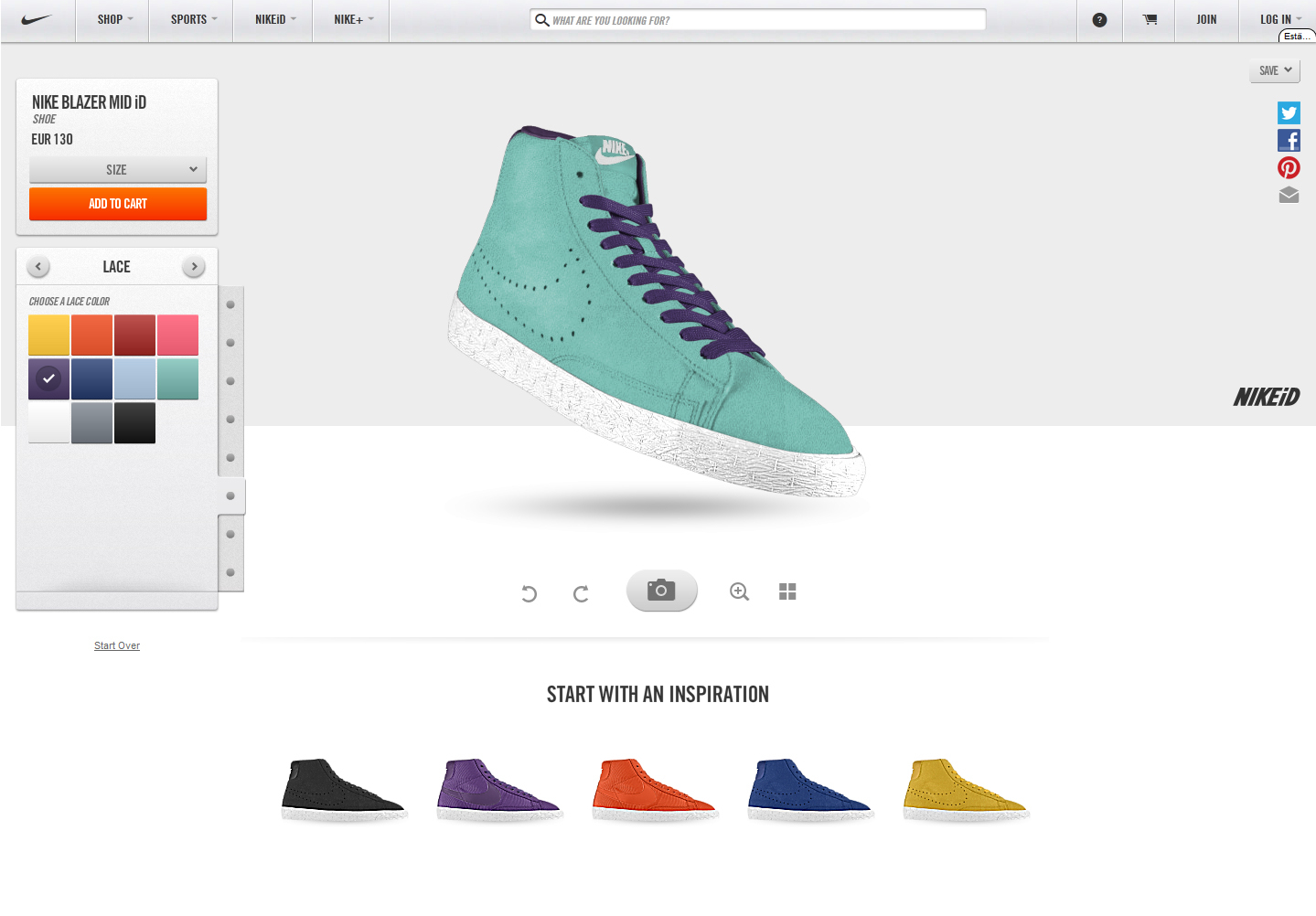
nike_id_cropFigure 1. NIKEiD is an online application that allows customers to personalize their shoes. (Nike Inc., 2013)

tandemFigure 2. A tandem bicycle has the potential to increase social interaction. (Lee, 2011)

Materials offer great many ways to affect emotional relationships between people and their possessions. Because an emotional attachment can be seen to comprise of reflective experiences that in turn are based on immediate sensations (Demir, 2008), materials’ physical properties are directly related to product attachment. One interesting possibility is to make products more pleasurable by creating surprises with incongruities between materials’ visual and tactile properties. Another one is to adjust products’ wear behavior through materials selection to allow them to age gracefully; to withstand use but also show signs of the history they share with their owners.

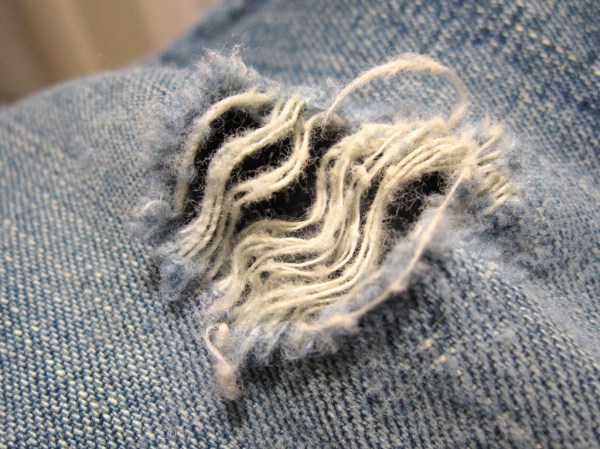
mary_biscuitworn_jeansFigures 3–4. Products that can help memory retrieval: a cookie jar that releases the scent of vanilla and a pair of worn out jeans. (Rakuten, 2018; Thompson, 2011)

In addition to materials’ tangible properties, product attachment can be facilitated by meanings embedded in them. The most straightforward way to do this is to employ individual meanings relevant to a person’s identity that can be related to things such as monetary value or environment-friendliness. A more challenging approach is to use one or several materials to construct combinations of meanings that are more personal and can refer to, for example, a certain kind of life style. Still, probably the most effective way to support product attachment by materials is to manufacture products using particular pieces of materials that carry memories or stories meaningful to their eventual owners.

swingFigure 5. Imagine owning a piece of furniture made of a fallen tree from the backyard of your childhood home. (Kaje, 2010)

Long-term research studying relationships between people and their belongings is needed for creating methods to systematically facilitate product attachment. On the other hand, it’s equally important that designers try to apply the information already available. Not only can these experiments produce extraordinary products but also act as conversation starters that help advance the research of consumer behavior in general.


References

Ball, A. Dwayne & Tasaki, Lori. 1992. The role and measurement of attachment in consumer behavior. Journal of consumer psychology, 1(2), 155–172.

Belk, Russel. 1988. Possessions and the extended self. Journal of consumer research, 15(2), 139–168.

Mugge, Ruth, Schifferstein, Hendrik & Schoormans, Jan. 2008. Product attachment: design strategies to stimulate the emotional bonding to products. In Product experience edited by Hendrik Schifferstein & Paul Hekkert, 425–439. Amsterdam: Elsevier science.

Nike Inc., 2013. NIKEiD. [Online] Available: https://www.nike.com/us/en_us/c/nikeid

Lee, M., 2011. Tandem. [Online] Available: http://www.flickr.com/photos/openmike/5751798859/

Rakuten, 2018. Alessi Mary Biscuit. [Online] Available: https://global.rakuten.com/en/store/cds-r/item/h-370/

Thompson, C., 2011. Worn Out. [Online] Available: http://www.flickr.com/photos/claire69/5454808947/

Kaje, 2010. A Swing Without. [Online] Available: http://www.flickr.com/photos/kajeyomama/4987980859/

Demir, Erdem, 2008. The field of design and emotion: concepts, arguments, tools, and current issues. METU Journal of the faculty of architecture, 135–152.

Materials as Means of Attachment

Why We Can’t Have Nice Things

Recently, in a seemingly recurring article (Brownlee, 2015), well-known designers gave advice to young graduates. In the midst of the well-intended but a little less than practical suggestions, graphic designer Stefan Sagmeister provided an interesting discord:

“A young design graduate should be able to do what most designers claim to not be important: to know how to make things look good. We can find lots of people with decent ideas, and lots of people who are proficient in digital crafts and very few who really know form.”

Like Sagmeister points out, emphasizing aesthetics is somewhat at odds with the official opinion in the field of design. The reason for this is undoubtedly designers’ endless pursuit of convincing people that design is not just about making things look nice. It’s understandable that the significance of aesthetics is downplayed when efforts are made to elevate design from workshops to boardrooms. However, it’s unfortunate if design students adopt this attitude when they should be learning the fundamentals of their profession. This leads to them being stripped of the skills they are most likely to be successful with, especially early in their careers.

At times aesthetics seems almost taboo in design. It’s either not discussed or cloaked in subjectivity, the end result being the same. Sure, you may hear designs praised for their appearance, but almost never are any real arguments offered in support. It seems that these days designers can go through their whole education, if not career, believing that balance, proportion, contrast, harmony etc. are just words used to persuade unwitting clients. Either that, or designers reinforce the notion that aesthetics is subjective on purpose to protect themselves from criticism or hide their lack of confidence in their ability.

Il_Conico_www.amazon.comRossi-2-qt-Conico-Water-KettledpB00029RAUM
Figure 1. For those interested, Il Conico by Aldo Rossi is a master lesson in composition. (“Aldo Rossi 2-qt. Il Conico Water Tea Kettle,” 2015)

Maybe designers shouldn’t discuss aesthetics the same way that, for example, engineers discuss mechanics, but the discussion shouldn’t be philosophical either. Not that the philosophy of aesthetics isn’t a worthwhile subject of study, but designers should be more concerned with practical matters. At least in design education, if not anywhere else, aesthetics should be presented as a competence that can be acquired. Universities could contribute to the advancement of aesthetics also by recognizing it as a valuable field of research. For example, cognitive semiotics could be studied in relation to aesthetics to get more insight into product appraisal. Still, just letting go of the idea that there is no mastery of aesthetics would go a long way towards elevating the level of design produced.


References

Brownlee, J. (2015, May 21). 9 Top Designers On What Every New Grad Should Know. Retrieved from: http://www.fastcodesign.com/3046364/10-designers-on-what-every-new-grad-should-know

Aldo Rossi 2-qt. Il Conico Water Tea Kettle. (2015, September 5). Retrieved from: http://www.amazon.com/Rossi-2-qt-Conico-Water-Kettle/dp/B00029RAUM

Why We Can’t Have Nice Things

The User

If you work in a company designing products or services, you’ve probably heard a lot about “the user”. “The user will realize…”, “The user won’t know how to…” and so forth. Of course, “the user” is usually mentioned when a situation of using a product or a service is discussed and no one in the room is sure what really happens then. In these cases, “the user” can be very accommodating, fitting the preconceptions of designers, engineers and managers alike trying to convince others of their point of view.

The idea that the experience of using a product or a service should be pleasant has penetrated all industries. However, companies are still largely unclear on how to design for user experiences. Because of this, decisions related to the use of products and services are mostly based on intuition that is disguised as vague references to users’ wants and needs. This is where “the user” comes into play. The intuition of a person who has a good amount of experience of designing a certain type of product or a service and interacting with its users can be more than enough for creating a great user experience. On the other hand, it’s almost never a good idea to rely on intuition when designing products and services without previous experience of them.

If the goal is to create products and services that people truly enjoy using, there really is no substitute for user research that includes at least observing and interviewing users in context. Of course, to fully benefit from user research, companies have to commit to it and make it an inseparable part of their processes. Ideally, a company would make user research the sole responsibility of one or several employees with the necessary expertise. Unfortunately, investing in activities that don’t produce readily measurable value is not an option for most companies.

IMG_0154_croppedIMG_0158_croppedFigure 1. User personas is a valuable tool for injecting user research findings in design of products or services and communicating them to stakeholders. Illustrations by Elisa Pyrhönen.

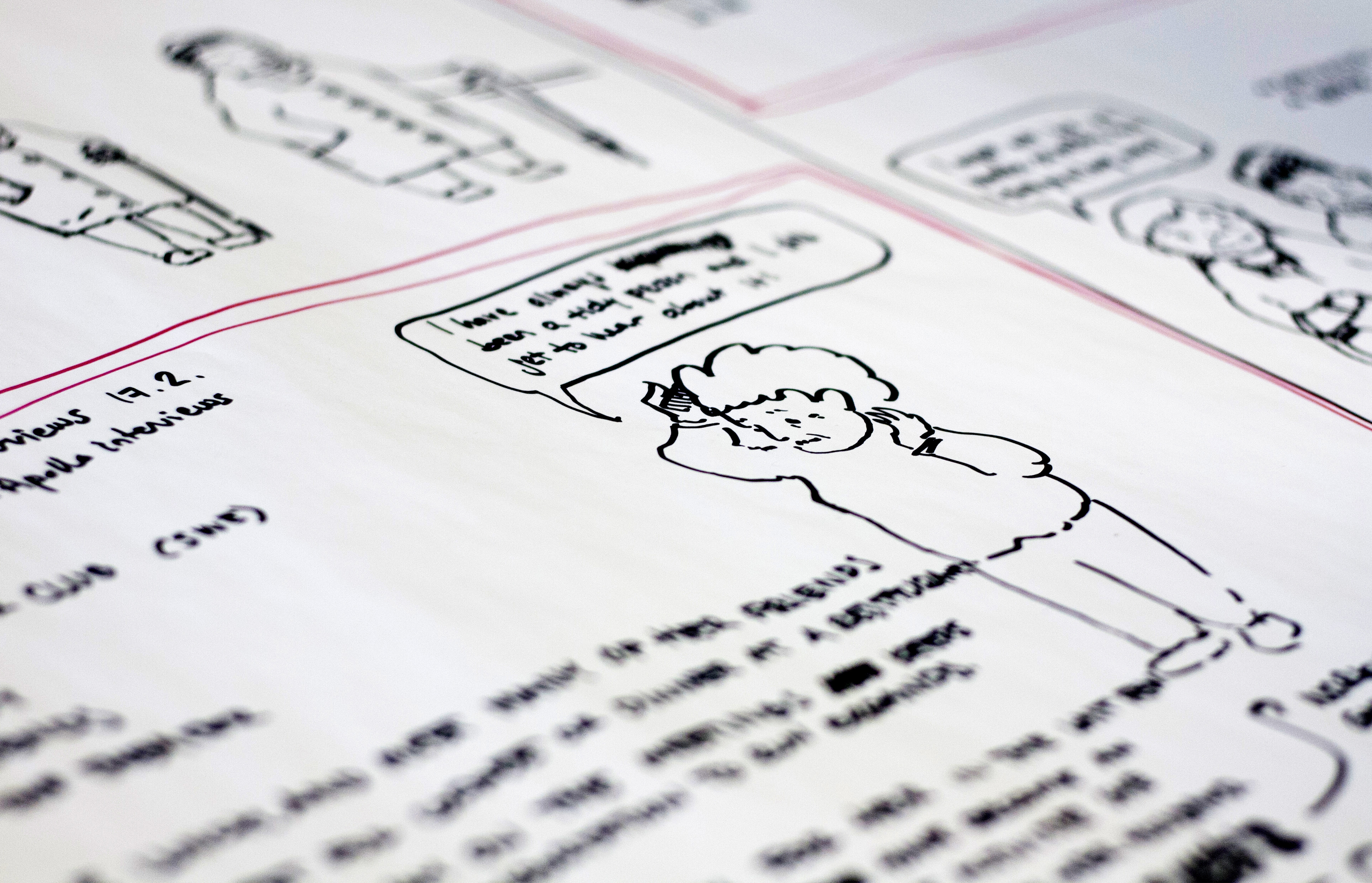
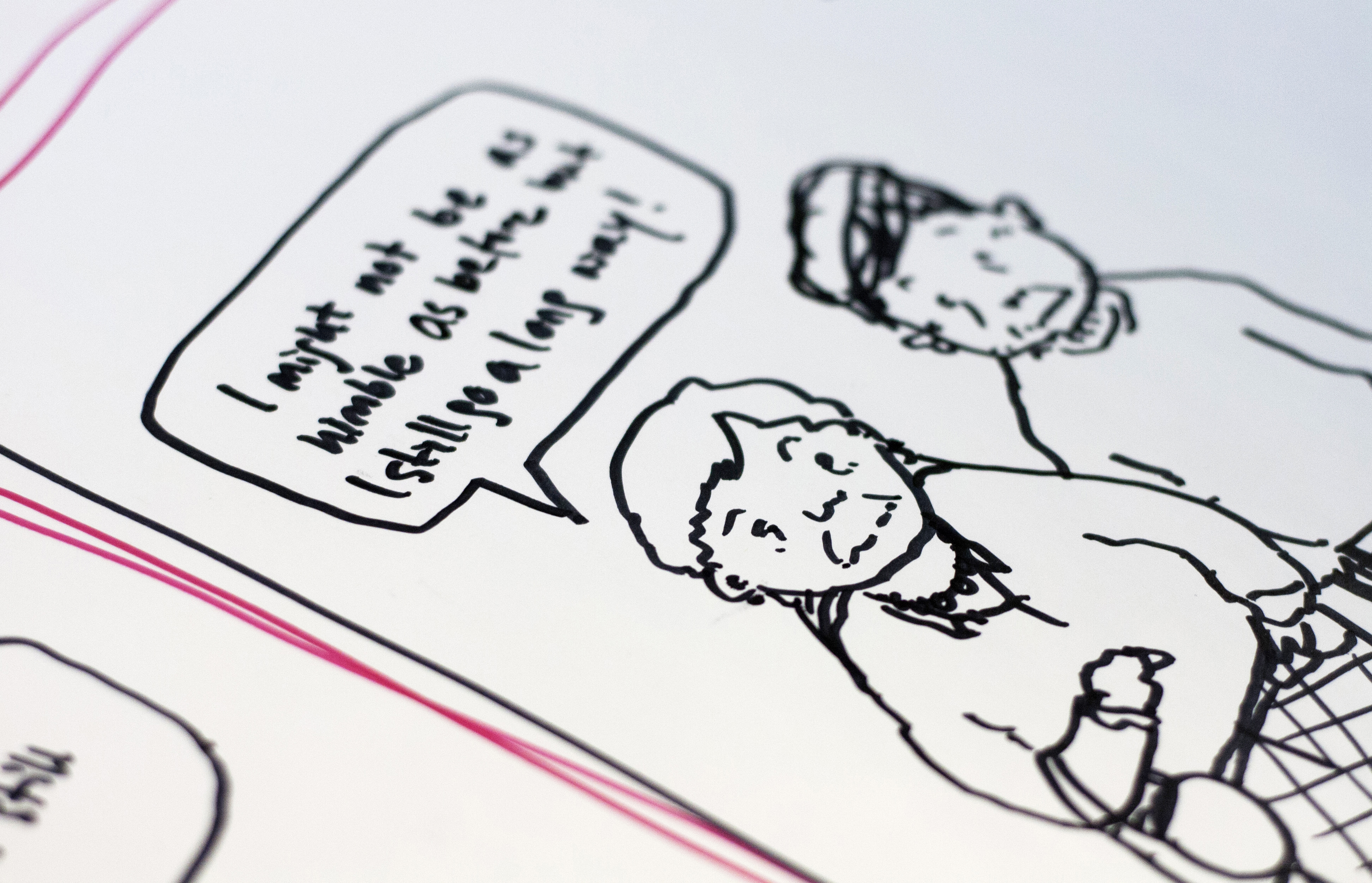
Even if a company is able to integrate user research into its everyday activities and dedicate resources to it, it still has one major obstacle to overcome: applying the research findings to the design of their products or services. One effective tool for this is user personas. Personas are user models that synthesize user research findings related especially to the behavior of the eventual users of a product or a service. They help to specify requirements, communicate design intentions to stakeholders and create a common understanding of the design task at hand. (Cooper, Reimann & Cronin 2007, p. 75–88) Personas are represented as specific individuals, and as such, they give a face and a name to “the user” who no longer serves as a crutch for the uninformed.


References

Cooper, A., Reimann, R. & Cronin, D. (2007). About Face 3: The Essentials of Interaction Design. Indianapolis, IN: Wiley.

The User

The Catch-22 of Usability

The usability and overall experience of using a product are now major competitive factors in consumer products. People have finally stopped blaming themselves for the problems they have using products and started to demand ease of use. Professionals in the field of user-centered design are in short supply, and new degree programs are popping up left and right to remedy the situation. Does this mean that all the confusion and frustration caused by poorly designed products will at last come to an end? Probably not. The truth is that we, as designers, might not always be the champions of user experience we claim to be.

The Catch-22 of usability is that, in general, the best way to improve the usability of a product is to reduce the amount of using it requires. This is not a new idea. Don Norman (p. 21) brought it up as early as 1990 when discussing user interfaces:

“The real problem with the interface is that it is an interface. Interfaces get in the way. I don’t want to focus my energies on an interface. I want to focus on the job.”

Alan Cooper, Robert Reimann, and Dave Cronin (2007, p. 202) are still trying to drive the point home two decades later when giving advice to interaction designers:

“Next time you find yourself crowing about what cool interaction you’ve designed, just remember that the ultimate user interface for most purposes is no interface at all.”

Unfortunately, when making usability improvements, we often end up perpetuating the same problems we’re trying to solve.

We designers are creative people, and as such, we have a tendency to create. So, when we’re asked to, for example, make something easy to use, that is exactly what we do, make. This is supported by the fact that our core skills are typically related to giving form to something. Of course, there are plenty of cases when interaction with a product is desirable and there is definitely something to be said about making beautiful products just for the sake of it. Still, even the decision of having users interact with anything at all should ideally be based on a thorough understanding of user needs.

An argument could be made that usability development should be left for non-design professionals with a background, for example, in cognitive science and ethnography. However, people will always gravitate towards solutions they’re familiar with and avoid the opposite, and it’s unlikely that any single professional will be able to tackle all usability issues. For this reason, the best outcome is likely achieved by a team of experts with a mixture of competencies, a common goal of making people’s lives as easy as possible, and no preconceived notions of the final outcome.


References

Norman, Donald. 1990. “Why Interfaces Don’t Work.” In The Art of Human-Computer Interface Design, edited by Brenda Laurel, 206–209. Reading, MA: Addison-Wesley.

Cooper, Alan, Reimann, Robert & Cronin, Dave. 2007. About Face 3: The Essentials of Interaction Design. Indianapolis, IN: Wiley.

The Catch-22 of Usability

Innovation and the Maker Movement

Makers are contemporary do-it-yourself enthusiasts who rely on various technology platforms to create low-cost prototypes and products. They can be anything from garage tinkerers to expert engineers, the common denominator being a willingness to experiment and learn by doing. Another thing that characterizes makers is a sense of community; ideas are shared and design reuse is encouraged. For an inside perspective, watch the trailer for the “Maker” documentary below. There’s also a chance to fund the production of a feature-length version of the documentary in a very maker kind of way.

The maker movement has been touted as a great driver for innovation, but as a source of innovation, its reach is limited. Makers are tied to existing technologies, lack the funds to carry out far-reaching projects and, even in teams, rarely possess the kind of cross-disciplinary expertise that modern innovation requires. However, if their approach to problem-solving and learning is adopted, especially in education, they may indirectly change the way we will deal with the many challenges of the future. Libby Falck (2014) succeeds in crystallizing the value of the maker attitude in education:

“Direct, meaningful application of technology is often the missing piece of STEM education. It’s also the piece that inspires true innovation.”

In addition to potentially transforming our relationship with science and technology, the maker movement has an important role as a counterbalance to the growing disconnection with the material world in developed countries. The move away from the physical can of course be seen in the digitization of once tangible artifacts, but it’s also visible, among other things, in how many designers view their work. On the verge of the internet explosion, Peter-Paul Verbeek and Petran Kockelkoren (1998) predicted that designers are becoming Platonists who “consider objects to be only derivative ‘copies’ of primordial ideas”. Verbeek and Kockelkoren were concerned that modern designers aren’t fully aware of the consequences of their work because of their detachment from its material nature. It’s hard to argue that being more in touch with the physical world wouldn’t give designers of today a richer perspective on their work and contribute to the well-being of all.

Whether it is paving the way for a collaborative practice-based way of learning or drawing more attention to physical exploration, the maker movement can definitely act as catalyst for innovation. The irony is that the individual efforts of makers are less likely to bring about significant innovation than the culture created by them collectively.


References

Falck, Libby. 2014. “Beyond the Maker Movement: How the ChangeMakers Are the Future of Education” Singularity University, July 27. http://www.forbes.com/sites/singularity/2014/07/29/beyond-the-maker-movement-how-the-changemakers-are-the-future-of-education/

Verbeek, Peter-Paul & Kockelkoren, Petran, 1998. The things that matter. Design issues, 14(3), 28–42.

Innovation and the Maker Movement